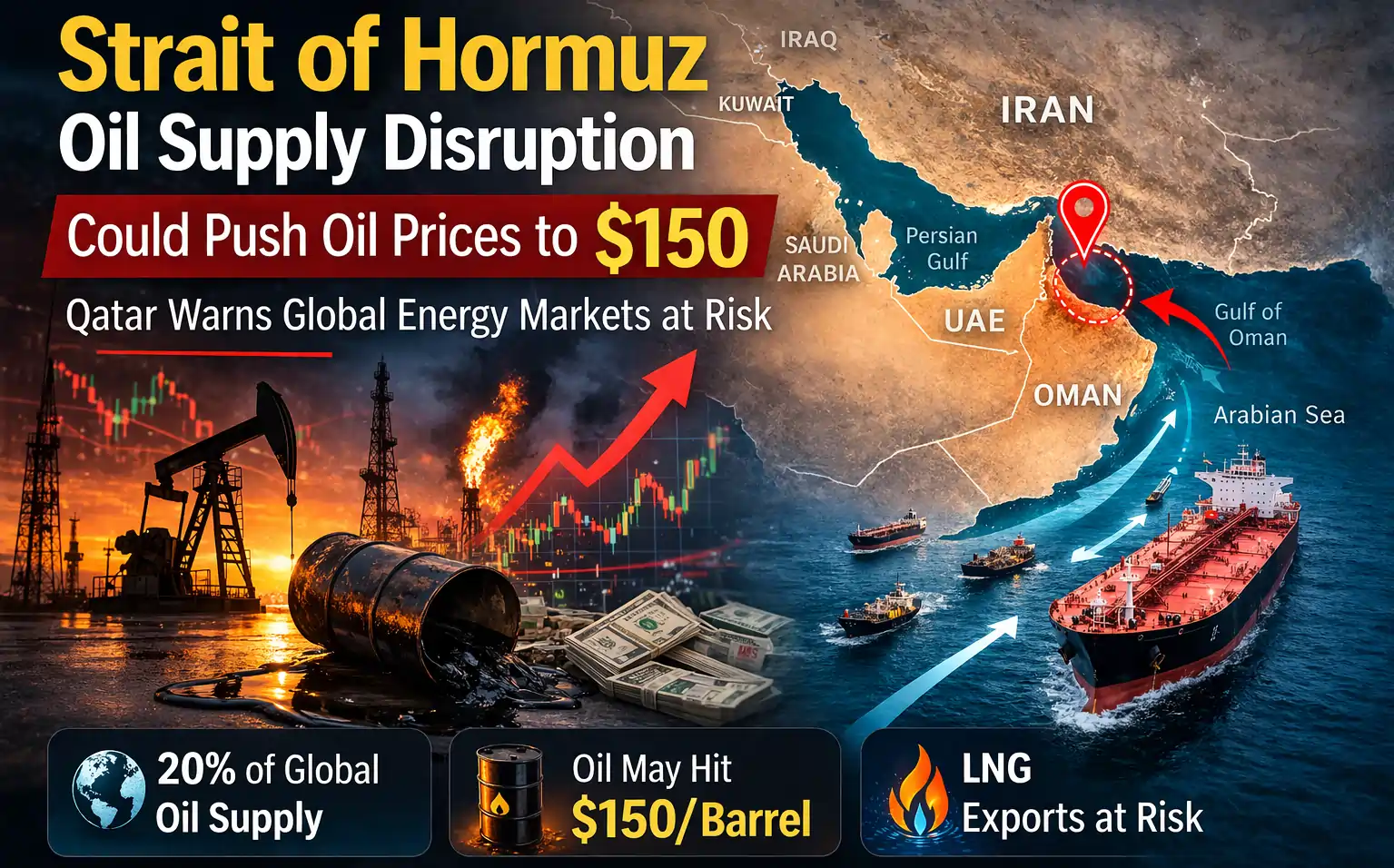
A potential Strait of Hormuz oil supply disruption could send shockwaves through global energy markets and push oil prices as high as $150 per barrel, according to officials from QatarEnergy. The warning highlights the growing risks facing global oil supply routes amid rising geopolitical tensions in the Middle East.
Energy analysts say the Strait of Hormuz oil supply disruption scenario could trigger one of the most severe energy shocks in recent years, as the narrow waterway plays a critical role in global crude exports.
Why the Strait of Hormuz Oil Supply Disruption Matters
The Strait of Hormuz is one of the most important shipping routes for global energy. Nearly 20% of the world’s oil supply moves through this narrow waterway every day.
If a Strait of Hormuz oil supply disruption occurs due to conflict, blockades, or tanker attacks, the impact on global markets could be immediate.
Key facts about the strait include:
- Around 17–20 million barrels of oil per day pass through the route
- It connects the Persian Gulf with the Gulf of Oman and Arabian Sea
- Major exporters include Saudi Arabia, Iraq, Kuwait, and the UAE
- The majority of shipments go to major Asian economies
Because of this massive energy flow, even a short-term Strait of Hormuz oil supply disruption could lead to significant price spikes.
Qatar Warns Oil Could Surge to $150
Officials from QatarEnergy warned that if tensions escalate and tanker traffic stops moving through the strait, oil markets could react rapidly.
According to reports published by Reuters, oil prices could climb toward $150 per barrel within weeks if exports from Gulf countries are halted.
At the time of the warning, Brent crude oil was trading around $89 per barrel, but markets have already begun pricing in geopolitical risks.
Energy experts say the biggest concern is that a prolonged Strait of Hormuz oil supply disruption could remove millions of barrels from global supply.
LNG Supply Risks Also Increasing
The risks are not limited to oil. Qatar is also one of the world’s largest exporters of liquefied natural gas (LNG), with most production located at Ras Laffan Industrial City.
A Strait of Hormuz oil supply disruption could also affect LNG shipments, which are critical for countries across Asia and Europe.
If LNG exports are interrupted:
- Global natural gas prices could surge
- Asian energy markets could face supply shortages
- European energy security could weaken
Because LNG shipping routes rely heavily on the same maritime corridor, any disruption in the strait would impact both oil and gas markets.
Oil Markets React to Geopolitical Risk
Global oil markets are extremely sensitive to geopolitical developments in the Middle East. When traders detect potential supply risks, prices often rise quickly due to a “risk premium.”
A possible Strait of Hormuz oil supply disruption has already increased volatility in oil futures markets.
Market participants are currently monitoring several factors:
- Military developments in the Gulf region
- Security conditions for tanker routes
- Diplomatic negotiations between regional powers
- Strategic petroleum reserve policies
If tensions escalate further, traders believe the Strait of Hormuz oil supply disruption risk could become a dominant driver of oil prices.
Economic Impact of an Oil Price Spike
If oil prices rise toward $150 due to a Strait of Hormuz oil supply disruption, the global economy could face significant challenges.
Historically, sharp oil price increases have contributed to:
- Higher inflation worldwide
- Rising transportation and manufacturing costs
- Increased fuel prices for consumers
- Slower economic growth
Major oil-importing countries such as India, Japan, and many European nations would likely feel the greatest economic pressure.
Energy economists warn that prolonged supply disruptions could trigger broader financial market volatility.
What Happens Next
Whether a Strait of Hormuz oil supply disruption becomes reality depends largely on geopolitical developments in the Middle East.
Analysts are watching closely for:
- Military escalation in the Gulf
- Security measures protecting tanker traffic
- Diplomatic efforts to reduce tensions
- Production decisions from major oil exporters
If shipping lanes remain open, oil markets could stabilize. However, if tanker routes are blocked, the Strait of Hormuz oil supply disruption could quickly tighten global supply.
The possibility of a Strait of Hormuz oil supply disruption highlights the vulnerability of global energy markets to geopolitical risks. With a significant portion of the world’s oil flowing through this narrow waterway, any disruption would have immediate and far-reaching consequences.
While the $150 oil price forecast represents a worst-case scenario, the warning from Qatar underscores how quickly energy markets can shift when supply routes are threatened.
For now, global markets remain on high alert as tensions continue to evolve in one of the world’s most strategically important energy corridors.