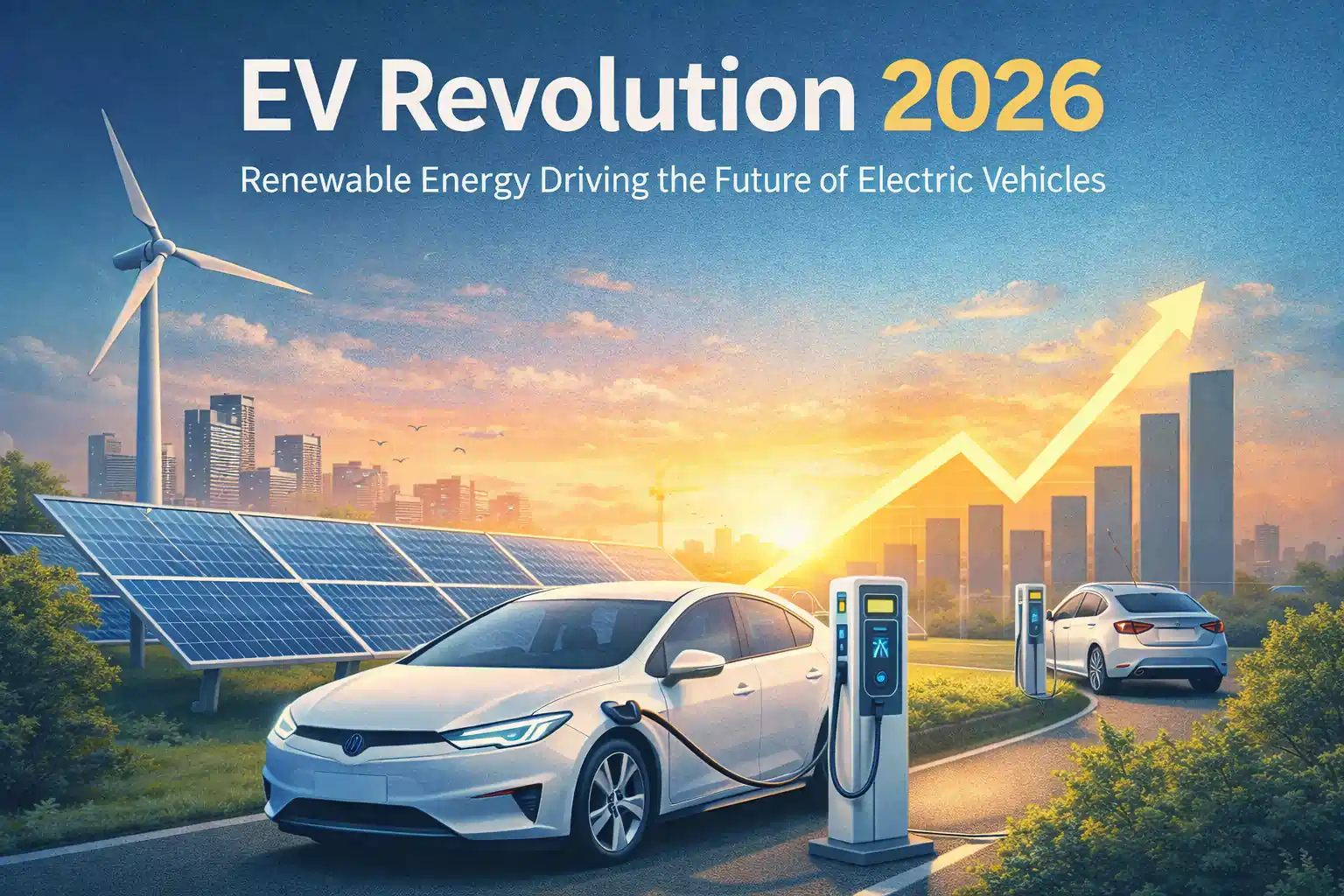
The EV Revolution 2026 is accelerating the global shift toward sustainable transportation. Electric vehicles (EVs), powered by renewable energy, are transforming mobility, reducing emissions, and creating new investment opportunities.
India is emerging as a major EV growth market, supported by government incentives, rising fuel costs, and rapid battery innovation. As the EV Revolution 2026 gains momentum, understanding its drivers, challenges, and opportunities is essential.
What Is the EV Revolution 2026?
The EV Revolution 2026 refers to the large-scale shift from petrol and diesel vehicles to electric vehicles powered by batteries and clean energy.
This transformation is driven by:
- Climate change and sustainability goals
- Renewable energy adoption
- Battery technology advancements
- Government incentives and policies
Key Drivers of EV Revolution 2026
Climate Change & Sustainability
Governments worldwide are pushing for lower carbon emissions, making EVs essential for a cleaner future.
Rising Fuel Prices
Increasing petrol and diesel prices are pushing consumers toward electric mobility.
Battery Technology Advancements
- Longer range (300–500+ km)
- Faster charging
- Lower battery costs
These advancements are making EVs more practical and affordable.
Role of Renewable Energy in EV Revolution 2026
Renewable energy is critical for making EVs truly sustainable.
Solar-Powered EV Charging
Solar panels can directly power EV charging, reducing electricity costs and emissions.
Smart Grid Integration
Smart grids balance electricity demand and enable efficient EV charging infrastructure.
EV Market Growth in India
India is one of the fastest-growing EV markets under the EV Revolution 2026.
Key Segments
- Electric two-wheelers (highest adoption)
- Electric three-wheelers (commercial usage)
- Electric cars (growing demand)
Growth Drivers
- Government incentives (PM E-DRIVE Scheme)
- Rising fuel prices
- Pollution concerns in cities
Government Policies Supporting EV Revolution 2026
Governments are accelerating EV adoption through : Governments are accelerating EV adoption through: (India’s active scheme is PM E-DRIVE, with an outlay of ₹10,900 crore, replacing the concluded FAME-II scheme in 2024)
- Purchase subsidies
- Tax benefits
- Charging infrastructure investment
- Strict emission regulations
These policies are reducing costs and boosting EV demand.
Challenges in EV Adoption
Despite rapid growth, challenges remain:
- Limited charging infrastructure
- High upfront costs
- Range anxiety
- Grid dependency on fossil fuels
Addressing these challenges is key to sustaining the EV Revolution 2026.
Future Trends in EV Revolution 2026
Emerging Trends
- Ultra-fast charging (under 20 minutes)
- Battery recycling technology
- Expansion of renewable energy grids
- AI-powered smart mobility
These trends will shape the future of electric transportation.
Investment Opportunities in EV Revolution 2026
The EV Revolution 2026 offers strong investment potential in:
- EV manufacturers
- Battery and lithium companies
- Renewable energy firms
- Charging infrastructure providers
Investors are increasingly focusing on these sectors for long-term growth.
The EV Revolution 2026 is transforming the global automotive industry. With renewable energy integration, strong government support, and technological innovation, EVs are set to dominate the future of mobility.
India is positioned as a key player in this transformation, offering significant opportunities for consumers and investors.