The global oil market operates through one of the most complex supply chains in the world, linking upstream production fields with refineries, trading hubs, shipping routes, and end-consumers. From geopolitical chokepoints to logistics infrastructure, each layer of the chain plays a critical role in determining price stability, energy security, and economic growth.
As energy markets face increasing volatility driven by geopolitical tensions, shipping disruptions, and shifting demand patterns, understanding how oil moves from wellhead to market has become essential for investors, policymakers, and businesses alike.
1. The Oil Supply Chain: From Exploration to Consumption
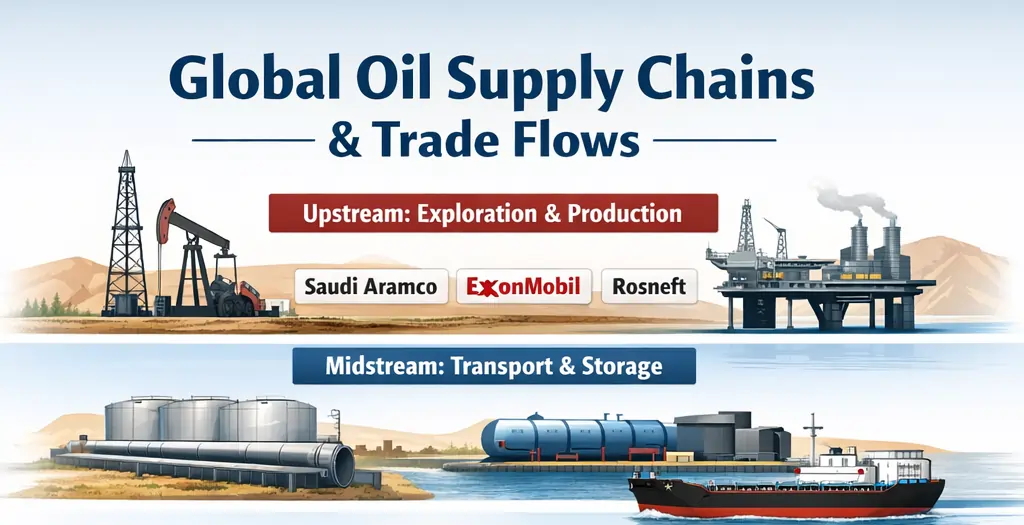
Upstream: Exploration and Production
The oil journey begins with exploration and drilling, primarily led by national oil companies and multinational majors. Key producers include:
- Saudi Aramco
- ExxonMobil
- Rosneft
These firms extract crude oil from onshore and offshore reserves, with production volumes heavily influenced by quotas set by OPEC and its partners (OPEC+).
Midstream: Transportation and Storage
Once extracted, crude oil enters the midstream segment, which includes:
- Pipelines (cost-efficient for land transport)
- Storage terminals
- Maritime shipping via tankers
Critical maritime routes include the Strait of Hormuz, through which roughly one-fifth of global oil supply flows, making it a key determinant of global energy risk premiums.
Downstream: Refining and Distribution
Refineries convert crude into usable products such as gasoline, diesel, jet fuel, and petrochemicals. Major refining hubs exist in:
- United States
- China
- India
Demand from transportation, manufacturing, and power sectors ultimately drives consumption trends.
2. Global Trade Flows: Who Supplies and Who Buys
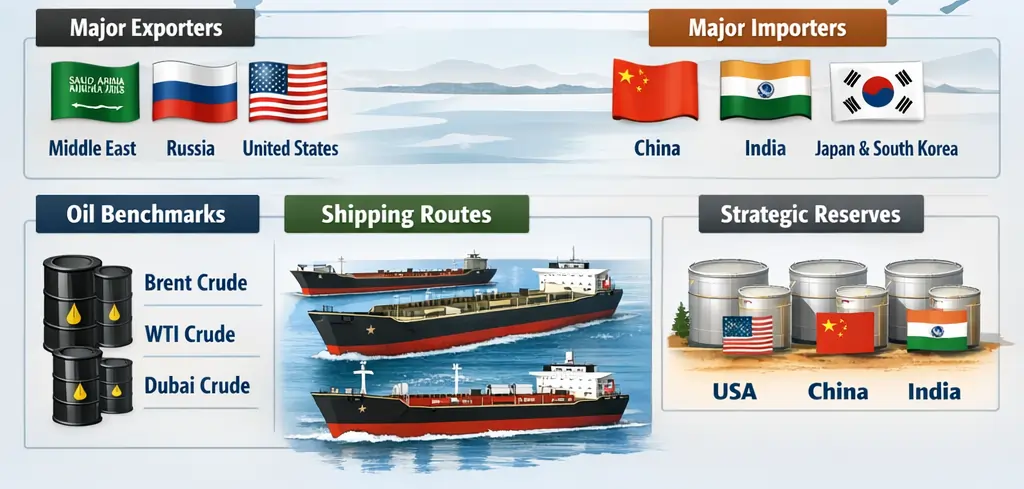
Major Exporters
Global crude exports are dominated by a handful of regions:
- Middle East (Saudi Arabia, Iraq, UAE)
- Russia
- United States (growing exporter of crude and refined products)
Major Importers
Demand centers are concentrated in Asia, where industrial growth and population density fuel energy consumption. Leading importers include:
- China (largest global importer)
- India
- Japan and South Korea
Asia’s reliance on maritime imports means shipping disruptions can quickly ripple through global prices.
3. The Role of Energy Benchmarks
Oil pricing is anchored to benchmark grades that reflect regional supply-demand balances:
- Brent Crude — International pricing reference
- West Texas Intermediate — North American benchmark
- Dubai Crude — Key for Asian imports
Traders, refiners, and governments use these benchmarks to price long-term contracts and spot cargoes.
4. Logistics and Shipping Dynamics
Oil transport relies heavily on tanker fleets categorized by size:
- VLCC (Very Large Crude Carriers) for long-haul routes
- Suezmax tankers for medium routes
- Aframax tankers for regional deliveries
Freight rates, insurance costs, and security risks can significantly influence delivered oil prices. For example, heightened tensions near strategic waterways often increase shipping premiums and rerouting costs.
5. Geopolitics and Supply Chain Risk
Oil supply chains are uniquely exposed to geopolitical risk because production and consumption regions are geographically separated.
Key risk drivers include:
- Military tensions near chokepoints
- Sanctions on major producers
- Production cuts or policy shifts
- Infrastructure disruptions (pipelines, ports)
These factors can tighten supply expectations and trigger price volatility even without physical shortages.
6. The Growing Influence of Strategic Reserves
Countries maintain strategic petroleum reserves to cushion supply shocks. The largest stockpiles are held by:
- United States Strategic Petroleum Reserve
- China’s national reserves
- India’s strategic storage program
Releases from these reserves are often used to stabilize markets during disruptions.
7. Energy Transition and Future Trade Patterns
While renewable energy adoption is accelerating, oil remains central to global trade due to:
- Aviation and shipping fuel demand
- Petrochemical feedstock needs
- Emerging market consumption growth
However, long-term trends suggest:
- Slower demand growth in developed economies
- Increased refining capacity in Asia and the Middle East
- Diversification of supply routes to reduce geopolitical exposure
Oil supply chains and global trade flows form the backbone of the modern energy system. From production decisions by major exporters to shipping security in key maritime corridors, each link influences price formation and market stability.
As geopolitical risks persist and the energy transition reshapes demand patterns, market participants must closely monitor logistics infrastructure, policy decisions, and regional demand shifts to understand the trajectory of global oil markets.