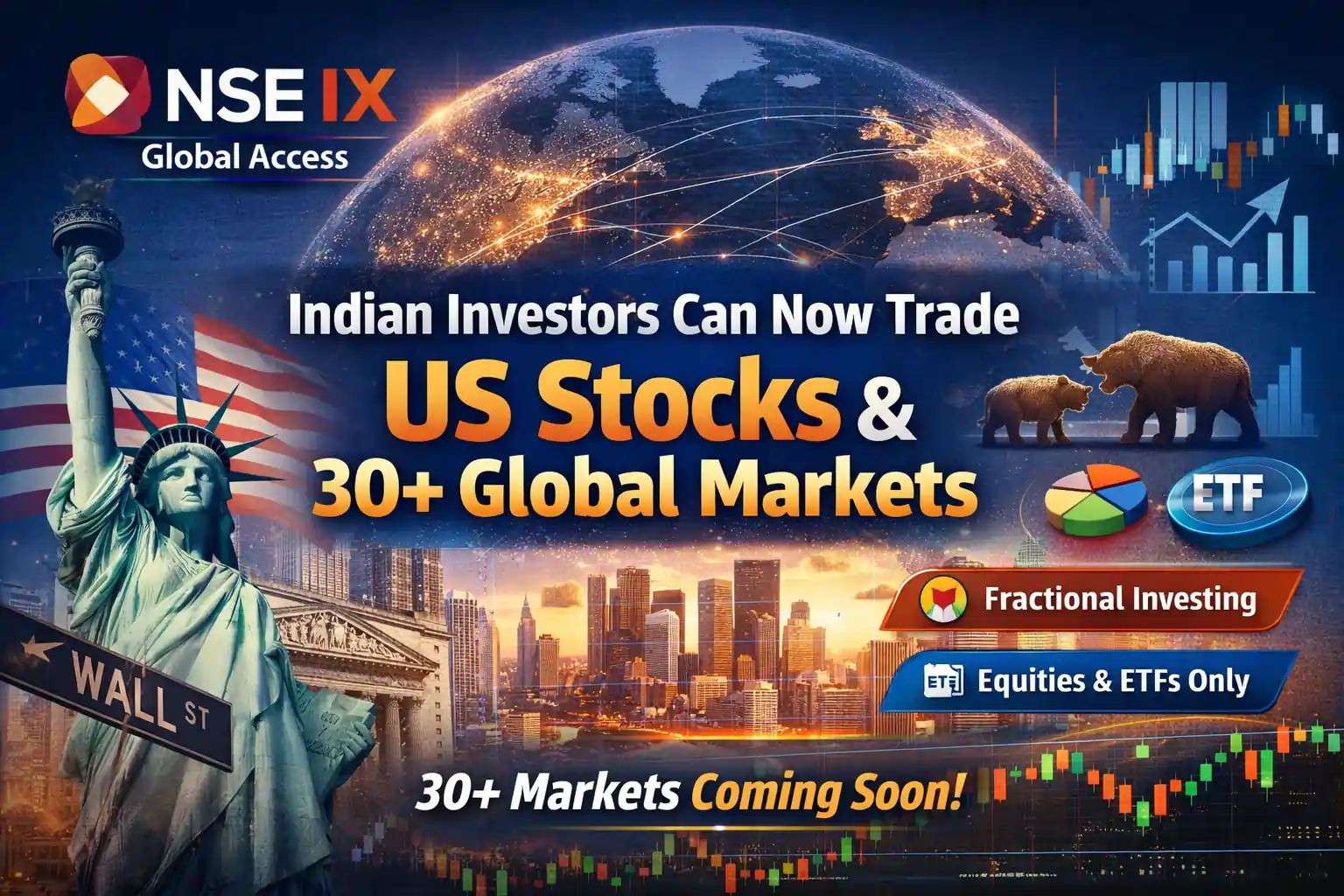
India’s global investing landscape is entering a new phase as NSE International Exchange (NSE IX) rolls out its Global Access platform, enabling Indian investors to directly trade overseas securities.
The first phase already live provides access to the United States equity market, with the exchange planning to expand coverage to more than 30 international markets over the next six months.
The initiative represents a major step toward integrating Indian retail capital with global financial markets while reinforcing India’s ambition to position GIFT City as a cross-border financial hub.
What Is NSE IX Global Access?
Global Access is a regulated international trading infrastructure that allows Indian investors to buy foreign equities and exchange-traded funds (ETFs) through an exchange-based ecosystem rather than relying solely on overseas brokerage accounts.
The platform is designed to simplify global investing by combining digital onboarding, regulatory compliance, and seamless execution within a domestic framework. Initially focused on US securities, the rollout will progressively include markets across Europe, Asia, and other major financial centers.
Key Features of NSE IX Global Access
1. Access to 30+ Global Markets
The exchange plans to expand coverage to more than 30 markets in phases, giving investors diversified exposure across geographies and sectors.
2. Live US Market Trading
The first phase enables Indian investors to trade US-listed stocks and ETFs, providing access to some of the world’s largest companies and sectors.
3. Fractional Investing
One of the platform’s most investor-friendly features is fractional share investing, allowing users to purchase portions of high-priced stocks.
This lowers entry barriers and makes global diversification accessible to a broader retail base.
4. Equities and ETFs Only
At launch, trading is limited to equities and ETFs. More complex instruments such as derivatives are excluded to maintain regulatory clarity.
5. LRS-Compliant Investments
Investments are routed through the Liberalised Remittance Scheme (LRS), under which individuals can remit up to $250,000 annually for overseas investments.
Why the Launch Is a Big Deal
1. Easier Global Diversification
Indian portfolios have historically been concentrated in domestic equities. Direct access to international markets allows investors to diversify across global sectors such as technology, healthcare, and consumer innovation.
2. Strengthening GIFT City’s Global Role
The platform strengthens India’s international financial services ecosystem by positioning GIFT City as a hub for cross-border capital flows.
3. Reduced Dependence on Foreign Brokers
By offering a domestic gateway for global investing, the exchange reduces reliance on offshore intermediaries and enhances transparency.
How the Platform Works
- Investors complete digital onboarding through registered brokers
- Funds are remitted overseas under LRS rules
- Trades are executed on international markets via NSE IX infrastructure
- Investors hold global securities in their accounts similar to domestic holdings
The simplified workflow aims to make global investing as straightforward as trading domestic equities.
Market Impact and Industry Response
For Retail Investors
The platform democratizes access to global equities, particularly high-growth sectors not fully represented in Indian indices.
For Brokers and Wealth Platforms
Brokerages and fintech firms gain opportunities to integrate global investing into their product offerings, expanding revenue streams and customer engagement.
For Capital Markets
The initiative is expected to gradually increase outbound portfolio flows while strengthening India’s financial market infrastructure and global connectivity.
Regulatory Framework Behind the Platform
NSE IX operates from India’s international financial services jurisdiction and functions within a robust regulatory framework designed to ensure transparency, investor protection, and compliance with cross-border investment norms.
The use of the LRS route ensures that foreign investments remain within RBI guidelines, balancing capital mobility with regulatory oversight.
Risks and Considerations for Investors
While the platform simplifies access, global investing still involves additional risks:
- Currency fluctuations
- Global economic cycles
- Geopolitical developments
- Different disclosure standards
Investors should evaluate these factors and align international exposure with long-term portfolio goals.
What to Expect Over the Next Six Months
As the rollout continues, the exchange is expected to:
- Add more developed and emerging markets
- Expand broker integrations
- Enhance investor education initiatives
- Strengthen technology infrastructure
If adoption scales as expected, the platform could significantly reshape how Indian investors allocate capital globally.
The Bigger Picture: India’s Financial Globalisation
The Global Access launch aligns with broader structural trends:
- Rapid growth in retail investing participation
- Rising demand for international diversification
- Policy focus on developing global financial infrastructure
- Digital transformation of investment platforms
Together, these trends indicate a long-term shift toward globally integrated portfolios among Indian investors.
The rollout of the Global Access platform marks a milestone in India’s capital market evolution. By enabling direct participation in overseas equities through a regulated domestic exchange, NSE International Exchange is bridging the gap between Indian savings and global investment opportunities.
As access expands to more than 30 markets, the initiative has the potential to transform portfolio diversification, deepen India’s financial integration with the world, and reinforce GIFT City’s position as a global financial gateway. For investors, it signals a future where global investing is no longer complex or exclusive but accessible, regulated, and seamlessly integrated into everyday investing.