Discussions around a potential US–India trade deal have returned to the spotlight after former US President Donald Trump revealed details of a conversation with Indian Prime Minister Narendra Modi, touching upon trade, tariffs, and energy cooperation. While no official agreement has yet been announced, the remarks have sparked widespread debate across financial markets, commodities, and policy circles.
At a time when global trade remains fragile and geopolitical risks persist, even the possibility of tariff relief and energy realignment between two of the world’s largest democracies carries meaningful implications.
What Is Being Discussed in the US–India Trade Deal?
According to the statement, talks reportedly include:
- A reduction in reciprocal tariffs imposed by the United States on Indian goods
- Steps toward lowering non-tariff barriers
- A broader push to expand bilateral trade volumes
- Greater cooperation in energy, technology, and agriculture
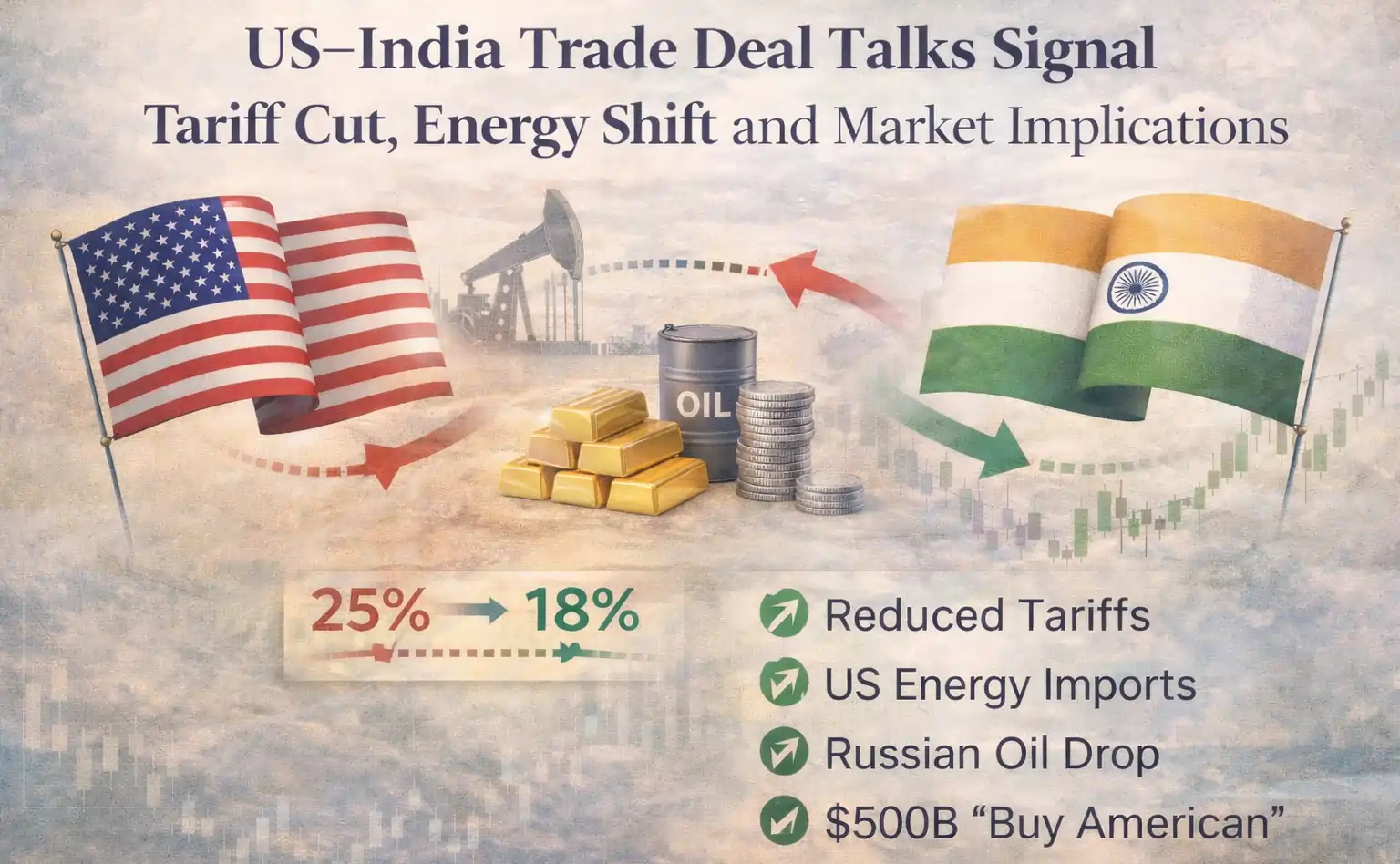
One of the most notable points mentioned was a potential cut in reciprocal tariffs from 25% to 18%, which—if implemented—could offer relief to Indian exporters facing cost pressures in the US market.
Energy Shift: Focus on US Oil and Reduced Russian Imports
Energy trade emerged as a key theme in the discussions. India has significantly increased purchases of discounted Russian crude over the past two years. Any move toward diversifying imports—particularly toward US energy supplies—could reshape global crude flows.
A shift of this nature would have implications for:
- Global oil prices, especially Brent crude
- MCX crude oil futures in India
- Energy-linked stocks and the broader commodity complex
However, analysts caution that energy sourcing decisions ultimately depend on pricing, logistics, and national interest rather than political statements alone.
“Buy American” and the $500 Billion Trade Ambition
The comments also referenced a larger ambition of expanding trade across multiple sectors, including:
- Energy
- Technology
- Agriculture
- Coal
- Manufacturing
The mention of a trade value exceeding $500 billion reflects long-term aspirations rather than near-term commitments. Any progress toward this level would require structured negotiations, regulatory alignment, and phased implementation.
Market Reaction: Why Investors Are Paying Attention
Markets tend to react not just to confirmed policy actions, but also to directional signals. The renewed discussion around a US–India trade deal matters because it intersects with several sensitive areas:
- Global tariff uncertainty
- Weakness in the Indian rupee
- Volatility in commodities like crude oil, gold, and silver
- Ongoing US–China and geopolitical trade overhangs
Even incremental tariff relief could improve sentiment for export-oriented sectors such as pharmaceuticals, IT services, engineering goods, and textiles.
What Comes Next?
At this stage, the developments should be viewed as early-stage dialogue rather than finalized policy. Investors and businesses will watch closely for:
- Official statements from Indian and US trade authorities
- Budget-linked policy follow-ups
- Clarity on energy procurement strategies
- Any formal trade framework announcements
Until then, markets are likely to price these developments cautiously, balancing optimism with realism.
The renewed focus on a US–India trade deal underscores the strategic importance of the bilateral relationship in a shifting global order. While tariff cuts and energy realignment could offer long-term benefits, execution—not intent—will determine the actual market impact.