Why Tokenization of Real-World Assets Is Gaining Attention
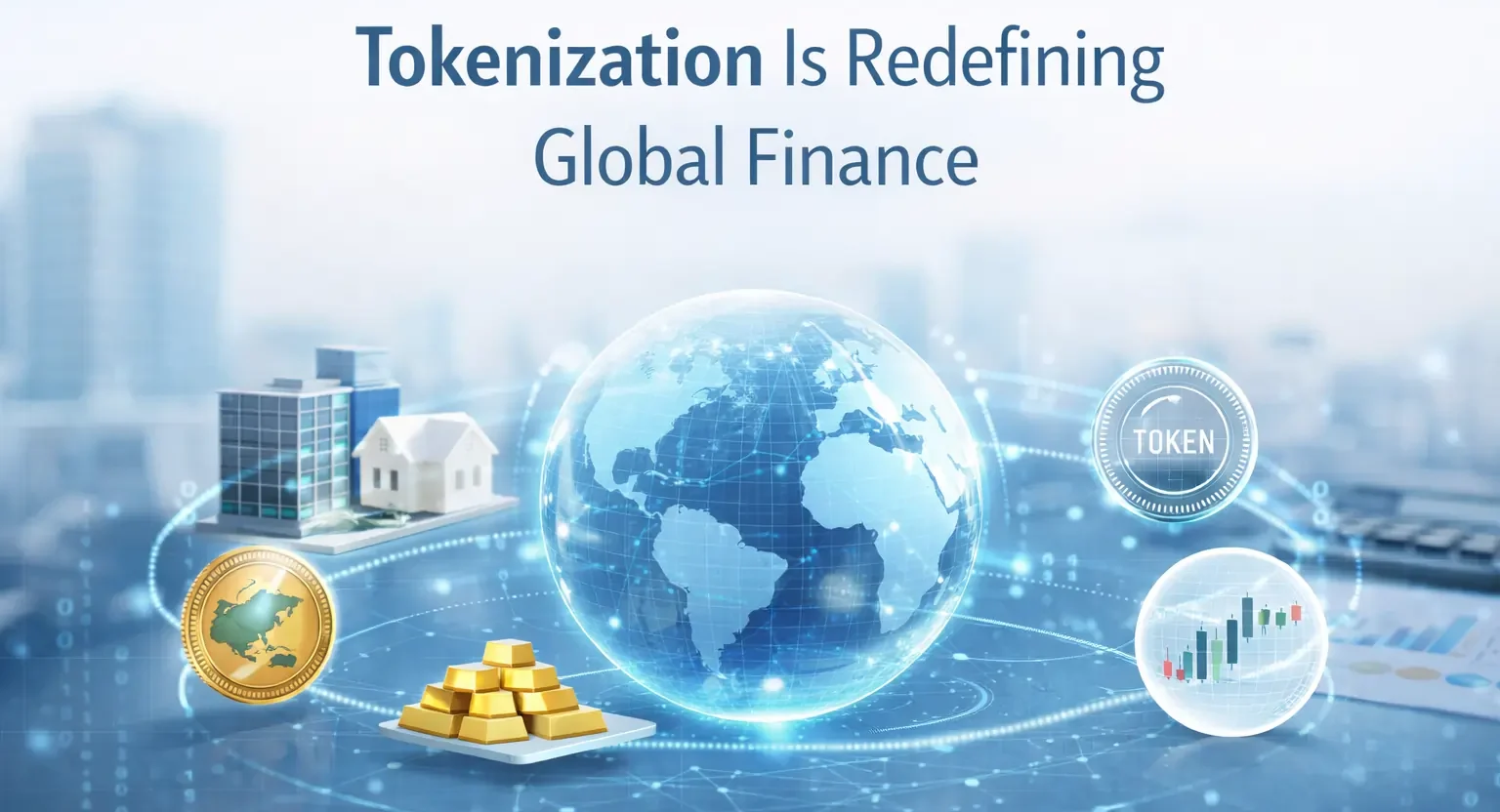
Tokenization of real-world assets is rapidly emerging as one of the most important developments in global finance. While Bitcoin introduced the world to digital scarcity and decentralised value, tokenization is expanding blockchain technology beyond cryptocurrencies into mainstream financial markets.
For investors and institutions alike, the conversation is shifting from crypto prices to financial infrastructure. And that is where tokenization could ultimately prove bigger than Bitcoin.
What Is Tokenization of Real-World Assets?
Tokenization refers to converting ownership rights of physical or financial assets into digital tokens on a blockchain.
These assets can include:
- Real estate
- Bonds and equities
- Commodities like gold
- Infrastructure assets
- Private funds and credit
Each token represents a verifiable claim, enabling secure transfer, fractional ownership, and faster settlement.
Unlike cryptocurrencies that derive value from scarcity or network adoption, tokenized assets are backed by existing real-world value.
Why Tokenization Has a Much Larger Market Than Bitcoin
Bitcoin’s market is limited to its role as:
- A store of value
- A speculative asset
- A hedge narrative
Tokenization, however, targets global asset markets already worth hundreds of trillions of dollars.
Consider the scale:
- Global bond markets exceed $130 trillion
- Real estate markets run into hundreds of trillions
- Private assets remain largely illiquid and inaccessible
Tokenization does not replace these markets—it digitises them.
This is why many analysts view tokenization of real-world assets as a structural shift rather than a trend.
Liquidity: The Key Advantage of Tokenization
One of the biggest challenges in traditional finance is illiquidity.
Tokenization improves liquidity by:
- Enabling fractional ownership
- Reducing settlement time
- Lowering transaction costs
- Expanding global investor access
Assets that previously took weeks to settle can potentially be traded and settled within minutes.
This efficiency is a major reason financial institutions are prioritising tokenization over speculative crypto assets.
Why Institutions Prefer Tokenization Over Crypto Speculation
Institutional investors focus on:
- Predictable cash flows
- Asset-backed value
- Regulatory clarity
- Risk management
Tokenized assets align far better with these priorities than volatile cryptocurrencies.
This explains the growing institutional focus on:
- Tokenized bonds
- Tokenized funds
- Tokenized commodities
- Tokenized real estate
Banks and asset managers see tokenization as a way to modernise capital markets without abandoning regulatory frameworks.
Bitcoin vs Tokenization: Different Roles, Different Impact
Bitcoin:
- Introduced decentralised money
- Relies on price appreciation
- Remains highly volatile
Tokenization:
- Modernises financial infrastructure
- Improves capital efficiency
- Expands market participation
Bitcoin changed perception.
Tokenization changes how markets function.
Regulation Is Supporting Tokenization Growth
Unlike early crypto markets, tokenization often works with regulators.
Features such as:
- Transparent ownership records
- Programmable compliance
- Traceable transactions
make tokenized assets easier to integrate into regulated financial systems.
This regulatory compatibility is accelerating adoption globally.
What Tokenization Means for Investors
For investors, tokenization of real-world assets shifts the focus from price speculation to value creation.
It enables:
- Access to previously illiquid assets
- Portfolio diversification
- Participation in institutional-grade markets
Over time, tokenization could become a core layer of global finance, much like electronic trading replaced paper-based systems.
Bitcoin opened the door to digital assets.
Tokenization of real-world assets is building the financial system that walks through it.
With a vastly larger addressable market, institutional adoption, and regulatory alignment, tokenization has the potential to become more economically impactful than Bitcoin itself.