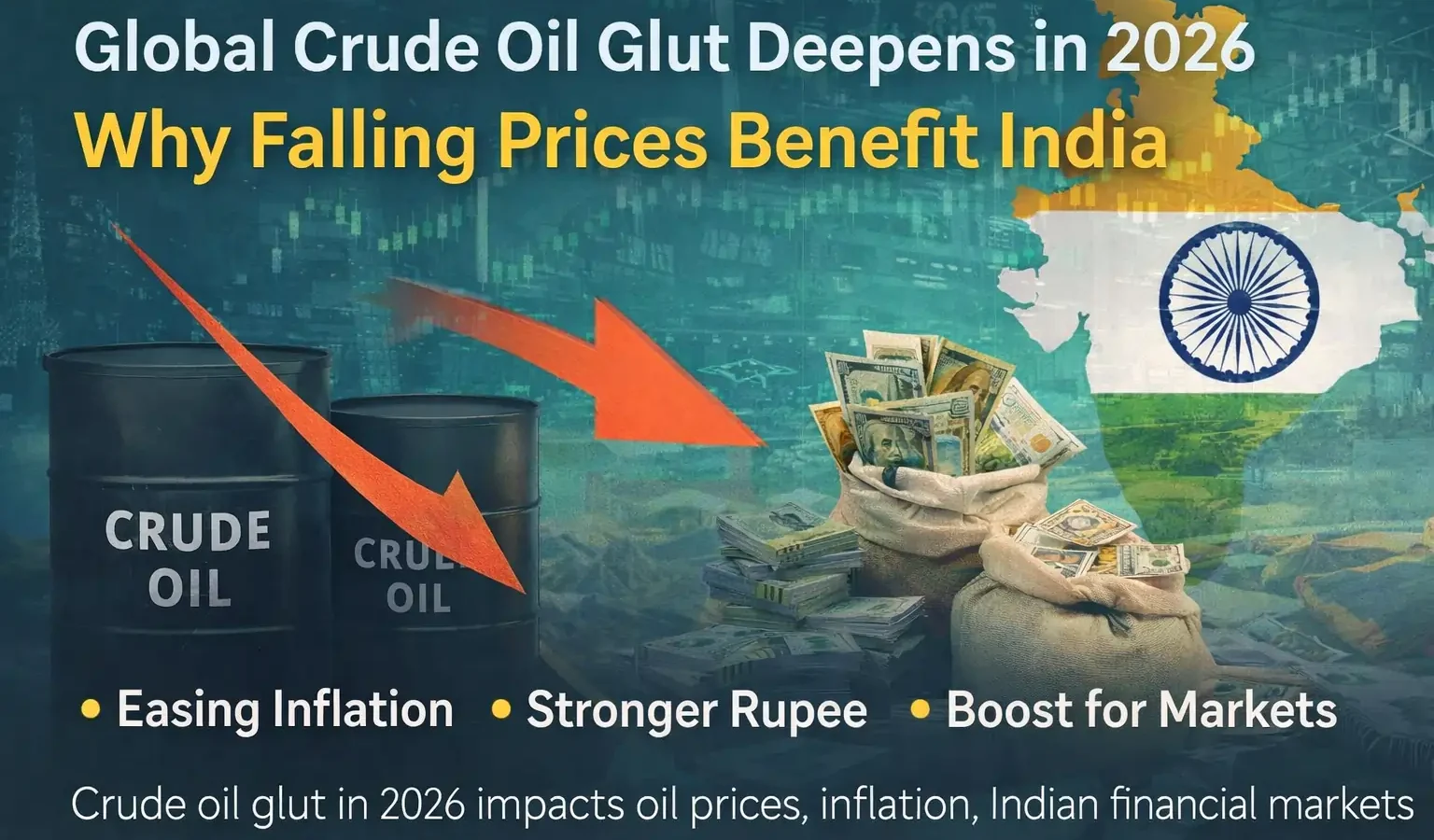
As global oil markets move deeper into 2026, the narrative is shifting decisively away from geopolitical fear and toward hard supply fundamentals. Temporary disruptions and political noise have failed to lift prices in a meaningful way, as mounting evidence points to a persistent global crude surplus.
For India—one of the world’s largest oil importers—this evolving landscape is emerging as a powerful macroeconomic advantage, with direct implications for inflation, currency stability, and equity market performance.
Global Oil Markets: Supply Overwhelms Risk Premium
The defining feature of the 2026 oil market is the widening imbalance between production and consumption.
According to the International Energy Agency’s January 21, 2026 report, global crude supply is expected to exceed demand by 3.7 million barrels per day this year. This surplus is large enough to neutralize most geopolitical disruptions, significantly reducing the upside risk to oil prices.
At the same time, the US Energy Information Administration has raised its crude oil production forecast to 13.59 million barrels per day, reinforcing the United States’ role as the world’s swing producer. Elevated US output has effectively diluted the price impact of OPEC+ production cuts.
On the demand side, momentum remains muted. China’s GDP growth slowed to 4.5% in late 2025, easing incremental oil demand from the world’s largest importer. With growth in Europe and other major economies also subdued, global consumption is failing to absorb rising supply.
Indian Crude Outlook: SBI Flags a Move Toward $50
While Brent crude continues to trade near the mid-$60 range, domestic projections suggest further downside. SBI Research has issued a high-conviction forecast indicating that the Indian crude basket could decline to $51.85 per barrel by June 2026.
Such a move would mark a meaningful shift in India’s macro environment, with cascading effects across inflation, currency markets, and corporate earnings.
Inflation Dynamics: Oil-Led Relief for Policy Makers
Data from the Petroleum Planning and Analysis Cell (PPAC) shows that the Indian crude basket averaged $61.84 per barrel in early January 2026, down sharply from nearly $71 in July 2025.
This sustained decline in crude prices is expected to:
- Reduce fuel and logistics costs across the economy
- Ease input price pressure for manufacturers
- Reinforce a disinflationary trend
According to SBI estimates, lower crude prices could reduce headline inflation by approximately 25 basis points, allowing the Reserve Bank of India to maintain a growth-supportive policy stance for longer.
Rupee Outlook: Lower Oil Bill Strengthens External Position
India’s crude imports represent the single largest drain on its foreign exchange reserves. A sustained fall in oil prices directly improves the country’s current account dynamics.
SBI’s analysis suggests that:
- At a base exchange rate of ₹90.28 per dollar
- Lower oil prices could enable a 3% appreciation in the rupee
- Potentially strengthening it toward ₹87.50 per dollar
A firmer currency not only limits imported inflation but also improves India’s relative attractiveness to foreign investors.
Sectoral Winners: Consumption Moves Into Focus
Historically, periods of lower crude prices shift market leadership toward consumption-driven sectors.
Aviation: Falling fuel costs are supporting margin recovery for airlines such as IndiGo and SpiceJet, particularly as passenger traffic remains strong in 2026.
Paints and Chemicals: Companies like Asian Paints and Berger Paints are benefiting from a sharp correction in crude-linked raw material prices, driving their strongest gross margins in several years.
Logistics and E-commerce: Lower diesel prices are directly enhancing profitability across transport and delivery-focused businesses.
Geopolitical Risks: Short-Term Volatility, Limited Impact
While the broader trend remains bearish, investors are monitoring near-term risks, including:
- Temporary production outages in Kazakhstan affecting roughly 900,000 bpd
- Trade-related rhetoric that could trigger brief price spikes
However, in the context of a multi-million-barrel surplus, these factors are unlikely to alter the medium-term trajectory.
Market Perspective: A “Goldilocks” Setup for India
The global oil market in 2026 is delivering a rare balance for India. Prices are low enough to suppress inflation and support consumption, yet stable enough to avoid supply shocks.
For crude oil prices and Indian markets, this environment strengthens:
- Macroeconomic stability
- Currency resilience
- Corporate margin expansion
- Domestic consumption growth
As the global oil surplus deepens, crude prices are increasingly acting as a structural tailwind rather than a risk factor for India. For investors, the implication is clear: lower oil prices reinforce India’s domestic growth story, making consumption-led sectors the primary beneficiaries in the months ahead.