Indian equity markets remain cautious as investors closely track Budget-related expectations, with sector-specific positioning and institutional flows shaping near-term market behaviour.
Benchmark indices have shown increased volatility, reflecting uncertainty around fiscal priorities, government spending, and policy continuity, even as broader market fundamentals remain stable.
Why Budget Expectations Are Driving Volatility
Markets typically turn volatile ahead of the Union Budget due to:
- Uncertainty over fiscal deficit targets
- Expectations around capital expenditure
- Sector-specific policy announcements
- Potential changes in taxation and incentives
During this phase, market participants prefer to reduce aggressive positions and wait for clarity.
Institutional Positioning Ahead of the Budget
FII Activity
Foreign institutional investors have remained cautious in the run-up to the Budget, with:
- Reduced exposure to rate-sensitive and policy-dependent sectors
- Focus on global cues, bond yields, and currency movement
- Preference for liquidity and defensives
This cautious stance has contributed to intermittent selling pressure in frontline stocks.
DII Participation
Domestic institutional investors, supported by steady inflows, have:
- Maintained selective buying
- Focused on earnings visibility rather than Budget speculation
- Provided support during market declines
This has helped prevent sharper corrections despite foreign outflows.
Key Sectors Investors Are Watching
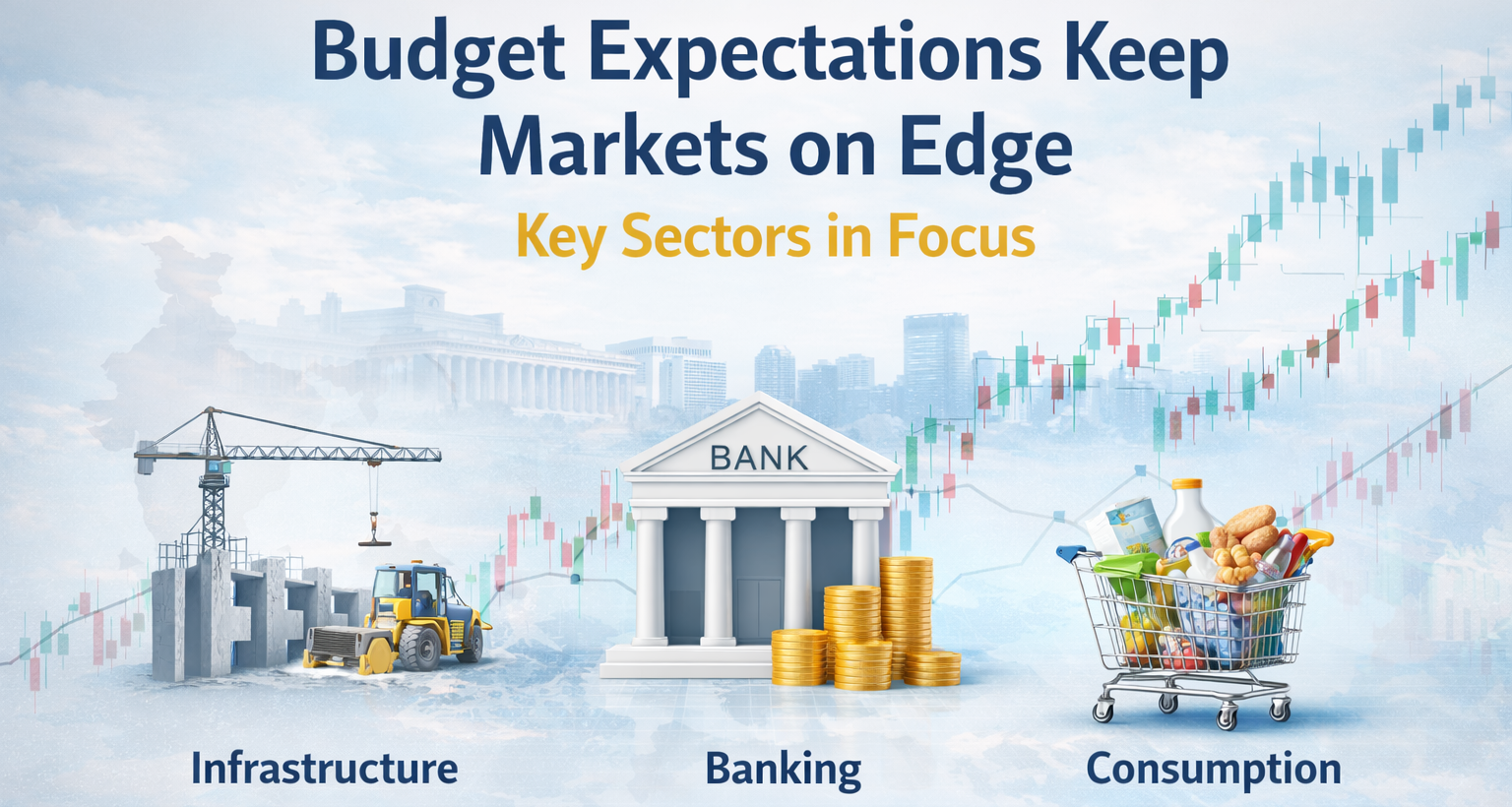
Infrastructure and Capital Goods
Expectations around government capital expenditure keep this segment in focus, though valuations have already priced in strong execution.
Banking and Financials
Markets are watching policy signals related to credit growth, fiscal discipline, and liquidity conditions, which could influence banking stocks.
Consumption-Oriented Sectors
Any clarity on tax relief or rural spending could impact consumer-focused stocks, though investors remain cautious until details emerge.
How Markets Typically Behave Post-Budget
Historically:
- Immediate post-Budget reactions tend to be volatile
- Markets stabilise once policy clarity emerges
- Earnings and liquidity regain importance over announcements
This pattern suggests that Budget-related volatility is often short-term in nature.
What Investors Are Tracking Next
Key triggers that could guide markets include:
- Final Budget announcements and implementation clarity
- Trend in institutional flows
- Global macro developments
- Corporate earnings commentary
Markets are expected to remain sensitive to headlines until policy direction becomes clearer.
Market View
Current market action reflects cautious positioning rather than risk aversion. While volatility may persist in the near term, strong domestic participation and stable fundamentals continue to provide support.
Investors are likely to adopt a wait-and-watch approach until Budget clarity emerges.