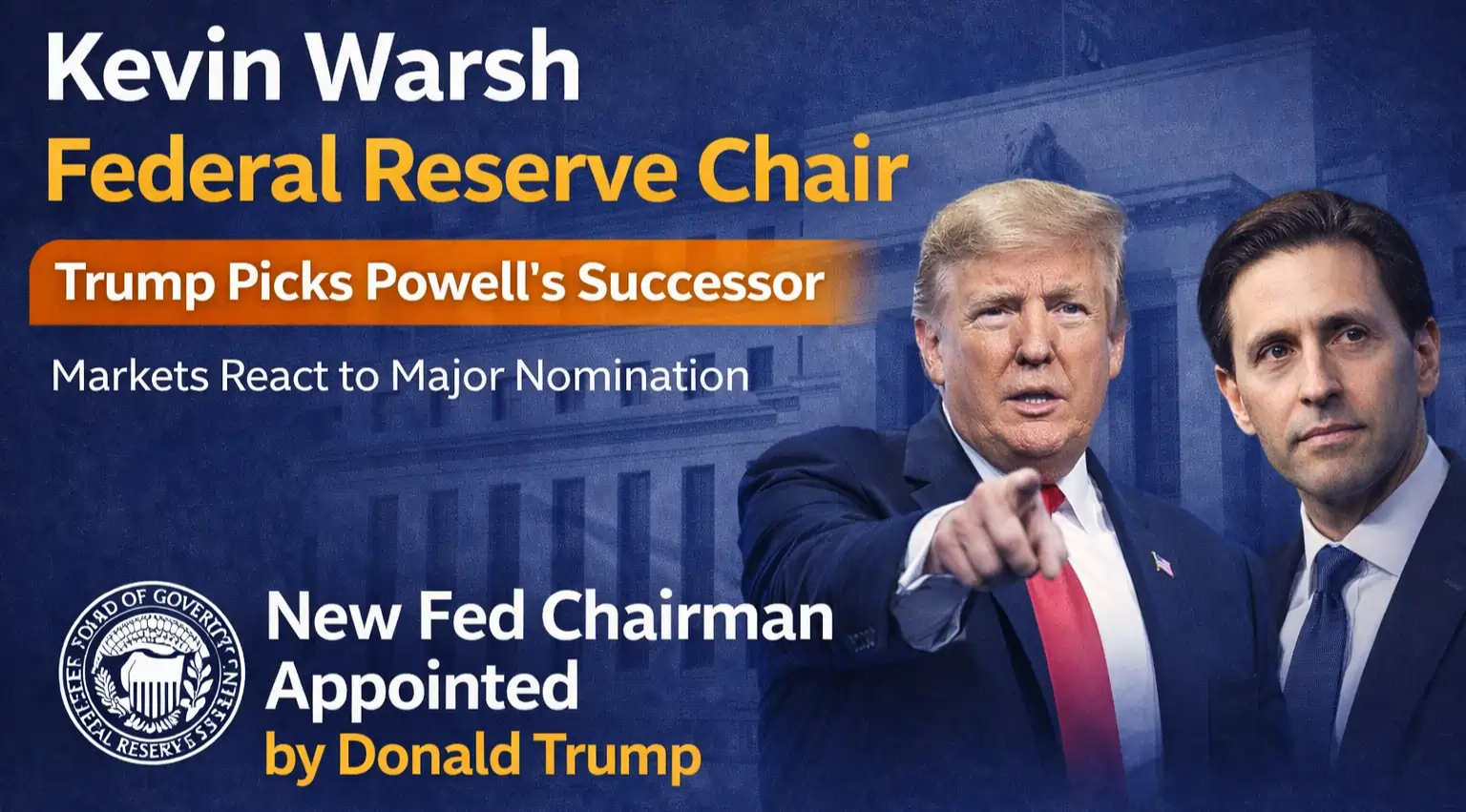
Kevin Warsh Federal Reserve chair nomination has emerged as a defining moment for US monetary policy after former President Donald Trump formally named the ex-Federal Reserve governor as his choice to succeed Jerome Powell.
Powell’s current term as Fed chair is set to conclude in May 2026, and the nomination places Warsh at the center of market expectations surrounding interest rates, inflation control, and central bank independence.
Who Is Kevin Warsh?
Kevin Warsh previously served as a Federal Reserve Governor from 2006 to 2011, a period that included the global financial crisis. During his tenure, he worked closely with senior policymakers on emergency liquidity programs, banking system stability, and crisis-era monetary decisions.
Beyond the Fed, Warsh has held influential roles in:
- Economic policy advisory groups
- Academic institutions
- Global investment and financial strategy circles
His experience places him among the most policy-seasoned candidates to lead the US central bank.
Why the Kevin Warsh Federal Reserve Chair Pick Matters
The selection of Kevin Warsh Federal Reserve chair is being closely watched by global markets due to his long-standing views on monetary discipline, inflation risks, and balance-sheet expansion.
Warsh has previously expressed concerns over:
- Excessive monetary stimulus
- Persistent balance-sheet growth
- Delayed responses to inflationary pressures
His leadership could therefore mark a more policy-driven and less accommodative tone at the Federal Reserve.
Trump’s Message to Markets
Donald Trump has consistently criticized past Federal Reserve leadership for maintaining higher interest rates during economic expansions. By backing Warsh, Trump appears to be signaling a preference for:
- Growth-supportive policy
- Faster reaction to economic slowdowns
- Greater accountability at the central bank
This has fueled debate over how the Kevin Warsh Federal Reserve chair era might reshape policy communication and decision-making.
Market and Economic Implications
While the Fed chair does not act alone, the role heavily influences:
- Interest rate outlooks
- Inflation expectations
- Bond market direction
- US dollar strength
Investors believe Warsh’s appointment could bring:
- Sharper focus on inflation control
- More transparent balance-sheet strategy
- Potential recalibration of rate-cut timelines
However, any policy shift would still require consensus from the Federal Open Market Committee (FOMC).
Senate Confirmation Remains Key
The Kevin Warsh Federal Reserve chair nomination must pass through Senate confirmation. Lawmakers from both parties are expected to closely scrutinize:
- His views on Fed independence
- Crisis-management approach
- Relationship between fiscal and monetary policy
The confirmation process itself could influence near-term market sentiment.
What Comes Next?
If confirmed, Kevin Warsh would assume leadership during a sensitive phase for the global economy, marked by:
- Sticky inflation risks
- Slowing global growth
- Heightened geopolitical uncertainty
His ability to balance credibility, independence, and economic responsiveness will define the next chapter of US monetary policy.
The Kevin Warsh Federal Reserve chair nomination is more than a leadership change — it represents a potential turning point in how the world’s most influential central bank navigates inflation, growth, and financial stability.
Markets will now shift focus from speculation to confirmation, policy signals, and the first clues of what a Warsh-led Federal Reserve might look like.