India AI Content Rules 2026: New IT Guidelines Mandate Synthetic Media Labeling
India AI Content Rules 2026 introduce strengthened compliance obligations for digital intermediaries, requiring clear labeling of synthetic media and enhanced due diligence mechanisms under the Information Technology framework. The regulatory update aims to curb AI-driven misinformation, deepfake manipulation, and platform-level accountability gaps.
The development reflects India’s evolving digital governance approach as artificial intelligence tools become more accessible and capable of generating hyper-realistic content across video, audio, and text formats.
What Are India AI Content Rules 2026?
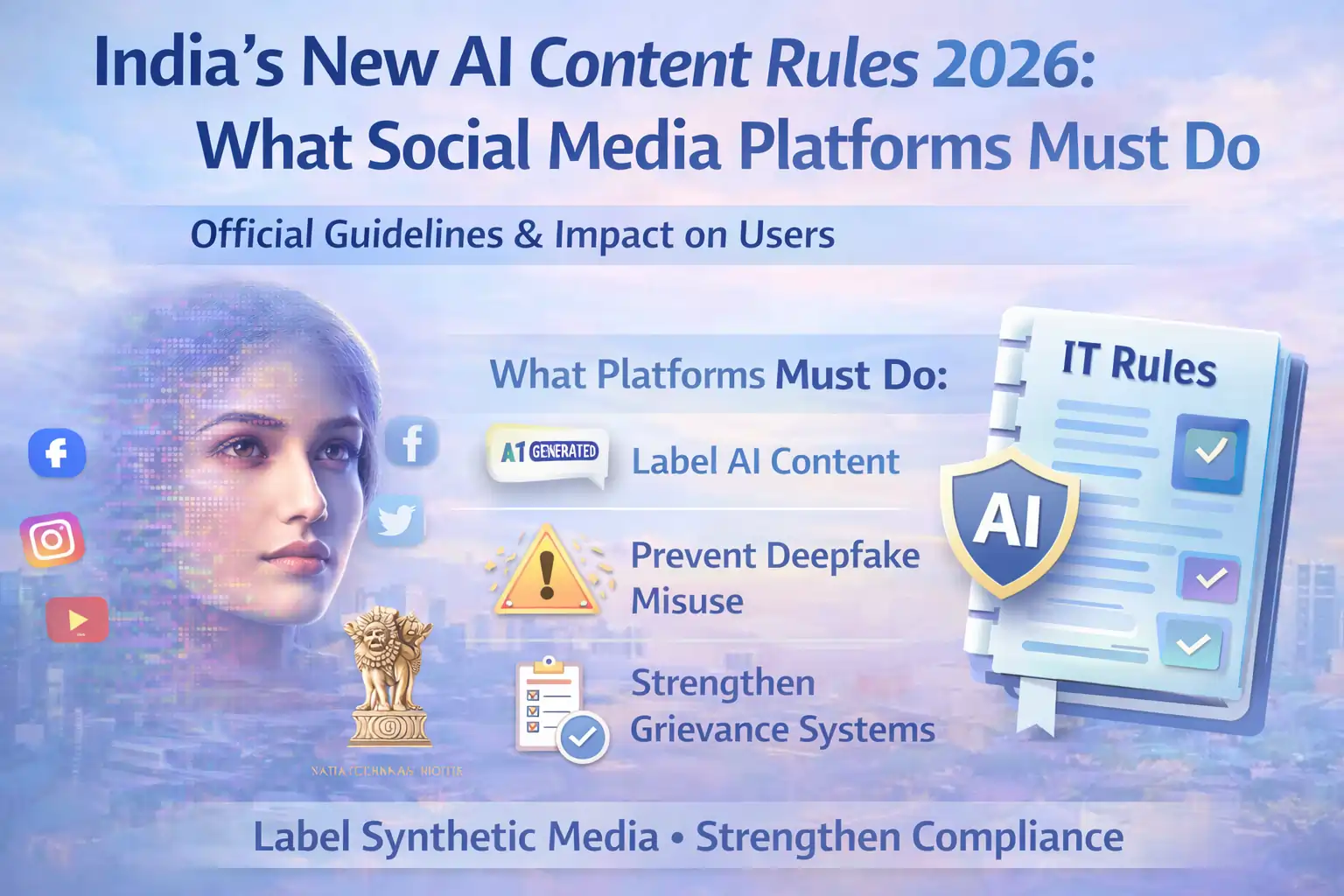
India AI Content Rules 2026 are updated compliance guidelines under the IT Rules framework that require social media platforms to label AI-generated content, prevent deepfake misuse, strengthen grievance redressal systems, and enhance transparency reporting to maintain intermediary safe harbor protections.
Why the Government Introduced India AI Content Rules 2026
The rapid expansion of generative AI platforms has created new regulatory challenges, including:
- Deepfake political campaign content
- AI-generated financial fraud videos
- Voice cloning impersonation scams
- Synthetic misinformation during elections
- Manipulated market-sensitive media
As AI tools scale, enforcement under traditional intermediary guidelines required clarification. India AI Content Rules 2026 aim to address these risks without introducing a standalone AI statute, instead strengthening obligations within the existing IT Act, 2000 and IT Rules, 2021 framework.
Key Compliance Requirements for Platforms
Under India AI Content Rules 2026, significant social media intermediaries are expected to implement the following measures:
1. Mandatory Labeling of AI-Generated Content
Platforms must ensure synthetic or manipulated media carries visible disclosure labels to prevent misleading representation.
2. Enhanced Due Diligence
Intermediaries must deploy reasonable technical safeguards to detect unlawful AI-generated content, including deepfakes and impersonation material.
3. Time-Bound Grievance Redressal
User complaints involving AI misuse must be addressed within defined compliance timelines.
4. Transparency & Risk Reporting
Platforms may be required to publish periodic transparency reports detailing AI-related content moderation actions.
Failure to comply may risk loss of intermediary safe harbor protections under Section 79 of the Information Technology Act, 2000, exposing platforms to legal liability.
Legal Foundation of India AI Content Rules 2026
The regulatory basis aligns with:
- Information Technology Act, 2000
- IT (Intermediary Guidelines and Digital Media Ethics Code) Rules, 2021
- Advisory frameworks issued by the Ministry of Electronics and Information Technology (MeitY)
Formal amendments, where applicable, are notified through the Official Gazette of India, providing statutory enforceability.
For official notifications, refer to:
- MeitY official portal
- Gazette publication records
Impact on Users and Digital Ecosystem
India AI Content Rules 2026 are structured to improve digital trust and platform transparency.
Users may observe:
- Clear “AI-generated” or “synthetic media” labels
- Faster removal of harmful deepfake content
- Improved reporting tools
- Greater accountability from major tech platforms
However, implementation clarity, technological feasibility, and definitional standards for “harmful synthetic content” will determine long-term effectiveness.
How India’s AI Framework Compares Globally
India AI Content Rules 2026 follow a distinct regulatory model compared to other jurisdictions:
- European Union: AI Act with risk-based classification system
- United States: Executive orders and sector-specific AI governance
- India: Platform-centric compliance integrated within IT intermediary rules
India’s approach focuses on strengthening intermediary accountability rather than classifying AI systems by risk tiers.
Broader Policy Implications
The introduction of India AI Content Rules 2026 signals a transition from advisory-level guidance to structured compliance enforcement in digital governance.
The policy shift indicates:
- Increased scrutiny of generative AI platforms
- Stronger emphasis on election integrity
- Alignment with global digital regulation trends
- Movement toward responsible AI deployment standards
As AI adoption expands across fintech, media, defence communications, and public information systems, regulatory clarity is likely to evolve further.
Conclusion
India AI Content Rules 2026 represent a calibrated regulatory intervention aimed at balancing innovation with accountability. By mandating synthetic media labeling and reinforcing intermediary due diligence obligations, India strengthens its digital governance architecture amid accelerating AI deployment.
Future developments may include detailed compliance timelines, expanded advisory frameworks, or statutory refinements depending on implementation outcomes. Government tightens AI-generated content compliance under IT Rules; platforms required to label synthetic media, strengthen grievance systems, and prevent misuse.